
Clean Stairs and Wood Handrails
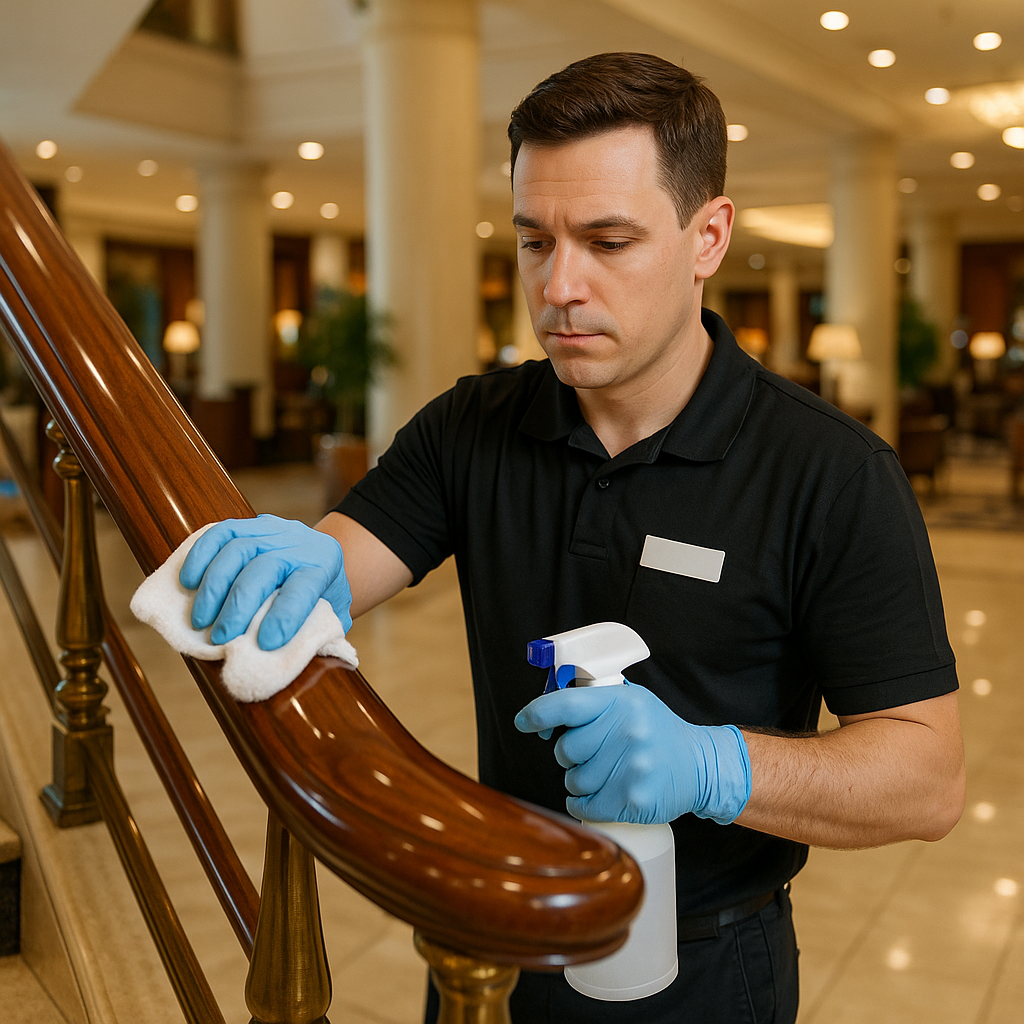
Now is the time to focus on how to maintain stair hand rails, cleaning wood handrails, and restoring them in busy areas for your visitors. Maintenance of stair railings in high-traffic areas can help visitors reduce the spread of infections. This page is about maintaining stair railings in high-traffic areas.
How do you use a correct spray bottle and stainless steel cleaner without damaging the wood grain and wooden bannisters? The following are discussed:
- How can a cleaning routine prevent wear and tear?
- Deep cleaning escalator steps with mild detergent, a soft-bristled brush, and a stiff-bristled brush, maintaining the safety and functionality of handrails.
- Clean wooden and stainless steel surfaces.
- Escalator cleaning and general maintenance of wooden handrails.
- Cleaning routine of wooden handrails with a soft cloth and a microfiber cloth.
Why Wood Hand Railings Matter in Hospitality Environments
Wood hand railings in hospitality settings serve both functional and aesthetic purposes. They offer essential support and safety for guests navigating stairways, while contributing to the overall ambiance and first impression of your space.
In busy environments, the condition of these railings directly reflects your commitment to cleanliness and guest care. Well-maintained wood railings enhance the visual appeal and professionalism of your establishment, reinforcing a positive brand image.
Assessing Wear and Damage in High-Traffic Spaces
High-traffic areas subject wood hand railings to frequent contact, which can lead to visible wear such as scratches, stains, grime buildup, and even structural loosening. Regularly inspecting railings for these issues is the first step in an effective maintenance routine.
Look for signs like faded finish, sticky residue, splinters, or loosened fittings. Early detection of problems allows for timely intervention, preventing minor issues from becoming safety hazards or requiring costly repairs.
Essential Cleaning Techniques for Durable Results
Begin cleaning by dusting the hand railings with a microfiber cloth to remove loose dirt. Use a gentle wood-safe cleaner or a solution of mild soap and warm water, applying with a soft cloth or sponge to prevent scratching the surface.
For sticky spots or built-up grime, use a soft-bristled brush to gently scrub the affected areas. Always follow up by wiping the rails with a clean, damp cloth to remove any cleaner residue, and then dry thoroughly to avoid water damage.
Restoration Methods That Revitalize and Protect
If the wood appears dull or the finish is worn, consider restoring the railings with a wood conditioner or polish formulated for high-traffic use. For deeper scratches or worn spots, lightly sand the area and apply a matching wood stain, followed by a protective sealant.
Sealing wood railings with a durable, hospitality-grade finish not only revives their appearance but also offers long-lasting protection against moisture, oils, and repeated handling. This step is crucial in maintaining both beauty and safety in demanding environments.
Understanding the Unique Challenges of Stainless Steel Handrails & Wooden High-Traffic Stair Railings

Stairs railings in high-traffic environments, such as public buildings, shopping centers, and commercial properties, endure significantly more stress than those in residential settings. The constant flow of people leads to accelerated wear, increased exposure to dirt and grime, and a higher risk of accidental damage from impacts or vandalism.
Recognizing these unique challenges is the first step in effective maintenance of hand rails. Busy spaces require a proactive approach to ensure safety and compliance with building codes, as well as to maintain an appealing appearance that reflects positively on the facility.
By maintaining your wooden handrails and regular cleaning the escalator steps with warm water and a vacuum cleaner with a brush attachment, you can ensure the lifespan of the stair railings, whether they are stainless steel handrails, escalator handrails, or sticky wooden handrails.
Essential Inspection and Cleaning Techniques for Lasting Durability
Routine inspections are crucial for stair railings in high-traffic zones. Facility managers should check for signs of looseness, rust, dents, or splintering, depending on the material. Fasteners and mounting points should be tightened regularly to prevent instability.
Cleaning protocols should be tailored to the material: metal railings benefit from non-abrasive cleaning agents to prevent corrosion, while wood railings require gentle cleaning to avoid surface damage. Consistent cleaning not only extends the life of the hand rails but also helps identify issues before they become hazards.
Preventing Wear and Tear: Proactive Solutions for Busy Spaces
Scheduling preventative maintenance, such as applying sealants or touch-up paint, helps address small problems before they escalate. Encouraging users to report any visible damage also fosters a culture of shared responsibility for safety and upkeep.
Cleaning protocols should be tailored to the material: metal railings benefit from non-abrasive cleaning agents to prevent corrosion, while wood railings require gentle cleaning to avoid surface damage. Consistent cleaning not only extends the life of the railing but also helps identify issues before they become hazards.
Choosing the Right Materials and Finishes for Heavy Use
Material selection is key when installing or upgrading stair railings in areas with heavy foot traffic. Stainless steel, powder-coated metals, and treated hardwoods are popular choices due to their durability and resistance to frequent handling.
Opting for finishes that resist fingerprints, corrosion, and fading ensures the railing remains attractive and functional over time. Selecting materials with anti-microbial properties also contributes to overall hygiene in public or commercial settings.
Maintaining a Lasting Impression with Regular Upkeep
Establish a consistent cleaning schedule based on usage levels, and train staff on correct cleaning and inspection techniques. Promptly address any signs of wear, and keep a maintenance log to track interventions and identify patterns of heavy use.
By investing in regular upkeep, hospitality spaces not only extend the lifespan of wood hand railings but also ensure a welcoming, safe environment that leaves a lasting positive impression on every visitor.
Partnering with professional maintenance services ensures that inspections and repairs are completed to industry standards, reducing liability and extending the life of stair railings. These experts can identify underlying issues that may be missed during routine in-house checks. They can also do any cleaning related to handrails for stairs.

Establishing a regular maintenance schedule, adjusted for the specific usage patterns of the property, helps prevent lapses in care. Marketplace cleaning services like Babsy Cleaning can simplify and help with the upkeep of your high-traffic stair railings or hand rails.
Read other articles for more posts like this.